Showing posts with label History. Show all posts

Thursday, January 7, 2016

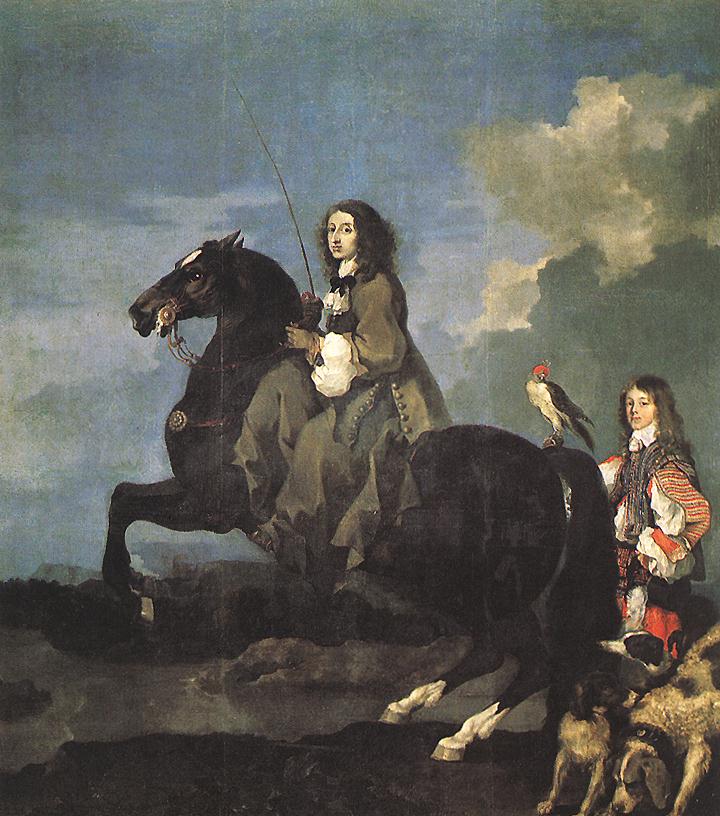
Inspiring Women from History: Christina of Sweden

There are some characters from History that I can't help but love reading about, and there are few as fascinating as Queen Christina of Sweden.

Who

Christina of Sweden (December 8, 1626-19 April 1689) was the daughter of Gustavus Adolphus of Sweden and, for a time, was Queen of Sweden.

Thursday, October 1, 2015

Inspiring Ladies from History: Katie Sandwina

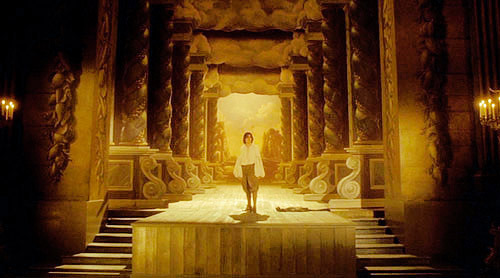
Ever seen Mister Rococo?

I first saw this short film ages ago, and I adored it. If you liked it as much as I did, then you should probably look into the life of Katie Sandwina.

Who

Katie Sandwina (1884 – January 21, 1952), born Katharina Brumbach in Vienna, Austria, was a circus strongwoman.

What

Katie Brumbach was one of fourteen (or possibly fifteen or sixteen) children born to circus performers. She showed an aptitude and strength early on, and performed with her family. By her teenage years, Katie's father would offer one hundred German marks to any man in the audience who could defeat her in wrestling. No one succeeded, but she did meet her future husband in one such wrestling match.

After defeating famous strongman Eugene Sandow – by lifting 300 pounds over her head – Katie took on the stage name of Sandwina in reference to that. She worked in the United States with Ringling Bros. and Barnum & Bailey Circus for many years, until she was nearly 60. One of her standard performance feats was lifting her husband (who weighed 165 pounds) overhead with one hand.

Sandwina was also described as being a great beauty and very feminine. Even after she retired from the circus and started a family tavern with her husband, she apparently kept her nails painted.

Katie Sandwina died in 1952 from cancer.

Why

A lot of the way that people talk about – and often think about – femininity is as exclusively “soft” or “fragile.” If we take anything away from Katie Sandwina’s life, it’s that we can be girly, beautiful, and powerful if we want to be.

And me? I love that idea.

I hope you find Katie Sandwina as interesting as I do. Because I'm a history major and a history nerd, this is something I want to do on this blog every so often. Most of the inspiring ladies I want to talk to you about are not going to be fashion icons, but they are going to be women who I find fascinating and who I take inspiration from in my understanding of the clothing I wear and the way I think about gender presentation.

Thursday, October 2, 2014

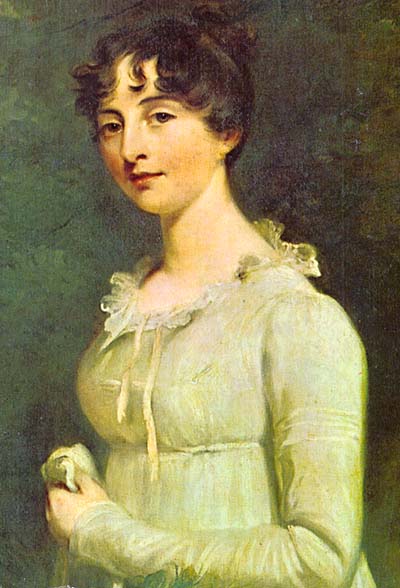
“A Very Useful Gown”: Regency Inspiration in Lolita

“I have determined to trim my lilac sarsenet with black ribbon just as my China Crape is …Ribbon trimmings are all the fashion at Bath, & I dare say the fashions of the two places are alike enough in that point, to content me. – With this addition it will be a very useful gown, happy to go anywhere.”
-Jane Austen, 5 March 1814


One thing that always disappoints me is that I will never look really well in a regency gown. The high waistline of the empire waist doesn’t particularly suit my frame. However, as it gets to be fall and I start looking for comfortable clothing to wear out and about, the regency calls to me.

And, because this is the sort of person I am, I did research. I watched movies (lots of Jane Austen). And I ended with a great desire to do a post about regency-inspired Lolita.

Thursday, July 10, 2014

“Fairer was to sene/Than is the lilie upon his stalke grene”: High and Late Medieval Inspiration in Lolita

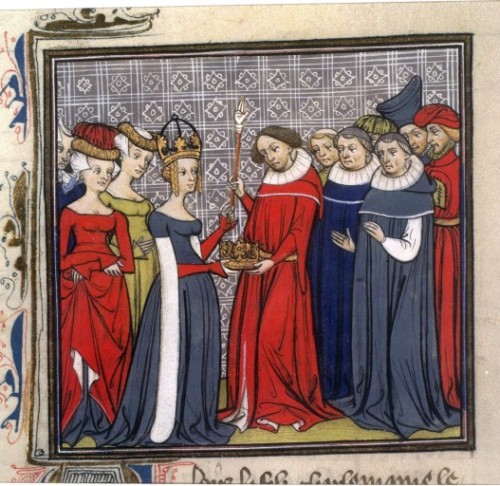
 Louis II le Bègue receives the Regalia.
France, 14th Century illustration of an event from the 800s
That’s right, ladies and gentlemen: Chaucer quote. We’re starting off this post with a punch of the vernacular.

The middle ages are a fascinating period, not the least of which because of the way fashion worked in society. Fashion was a way of communicating class, and its regulation was a way of dividing class.

In terms of time period, this post is going to focus on the style of the high and late middle ages (about 1000 to 1500). It’s a broad time period, I know, but information is more limited when it comes to the medieval world so this can’t be as precise as studies of more recent fashion.

And, really, medieval inspiration will end up a fair bit looser than other inspiration simply because the styles are very different. My philosophy, though, is that you need to start by pleasing yourself with a coord, whether people recognize the inspiration or not.

Thursday, February 27, 2014

Lolita in Winter: Why Aren't Flannel Petticoats and Underskirts a Thing?

Petticoats (Flannel)—These are not only useful, but indispensable articles of dress. Fine flannel is the best, as it is most durable, and keeps its color best in washing. The length of the petticoat is regulated by the height of the person for whom it is intended; and the width ranges from three breadths to one and a-half. The bottom is hemmed with a broad hem; and the top is gathered, and set on to a strong band of calico, or jean, leaving the front nearly plain. Sometimes a button hole is made, about two nails from the ends of the band, to which strings of tape are attached; these are passed through the opposite holes, and the parts thus brought over each other form a kind of bustle, which makes the garment sit more neatly to the figure. A slit of about four nails is left on the back which is hemmed round, or bound with a strong binding.

—Lady's Work Table Book, 1846

Living in Minnesota, and not even "Up Nort," it gets cold in winter. As such, much of my lolita gets put away when the snow blows through and the temperature drops below freezing because it's simply too cold. However, as I was trying to figure out which fabrics should come home with me now that winter fabrics are finally going on sale, I stumbled upon a question:

Why aren't flannel petticoats a thing?

I know that, every year, people sell polar fleece bloomers to keep the legs cozy. That makes perfect sense to me because it gets cold. I do, however, wonder why we haven't taken the extra step of making flannel underskirts for even more coziness when we're donning our frills.

As you can see from the quote above, this isn't exactly a new idea, but it's one I've not often heard in lolita circles. We hear about layering skirts under a skirt if we don't have a petticoat yet or wearing underskirts to add length, but I feel like we don't talk about the most practical aspect of all that fluff: we can add warmth very easily if we need to.

I know some people will argue that flannel isn't as elegant as the chiffon and lace froth that props up our skirts in the summer, and they might be right. But, really, I cannot help but wonder why this isn't something more lolitas in northern climes pursue.

If it was "indispensable" in 1846, I can't help but think we should look into the idea.

Thursday, May 23, 2013

Channeling The Gibson Girl: Edwardian Inspiration in Lolita

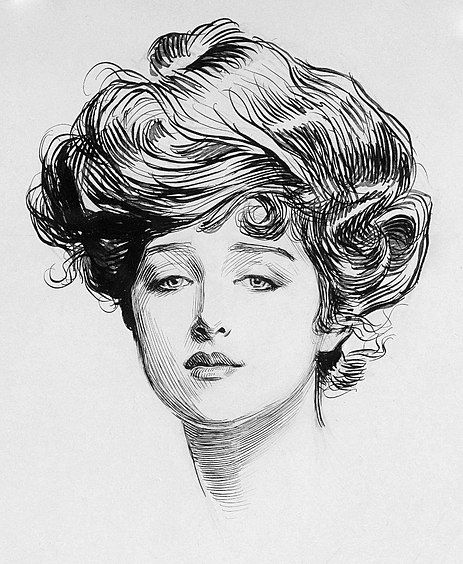
The Gibson Girl, avatar of Edwardian beauty.
The Edwardian era is often cited as an influence in lolita, but you don't often hear lolitas referencing the era when they talk about lolita fashion.

Rococo is ever-popular, with most lolitas including Momoko in Shimotsuma Monogatari (Kamikaze Girls) citing it as an influence. The Victorian era is less common but still commonly cited. But the Edwardian era? Rarely. Which is silly, because the era is rather a wealth of ideas.

Wikipedia summarizes the general look quite well:

Fashion in the period 1900–1909 in European and European-influenced countries continued the long elegant lines of the 1890s. Tall, stiff collars characterize the period, as do women's broad hats and full "Gibson Girl" hairstyles. A new, columnar silhouette introduced by the couturiers of Paris late in the decade signaled the approaching abandonment of the corset as an indispensable garment of fashionable women. [...] Blouses and dresses were full in front and puffed into a "pigeon breast" shape of the early 20th century that looked over the narrow waist, which sloped from back to front and was often accented with a sash or belt. Necklines were supported by very high boned collars.

Personally, I love this look. Whether that love is a result of watching too much Mr. Selfridge or being a bit too fond of The Importance of Being Earnest isn't something I'm comfortable speculating on. What I can say is that I really enjoy the clothing of the Edwardian era. And, because it's not something I commonly see cited as an inspiration for lolitas, here are my tips and tricks for adding a bit of 1900 charm to your frills.

Thursday, May 16, 2013

Inspiring Films: The Importance of Being Earnest

Okay, I'm not really one for the whole "comedy of manners" genre, but for this I make an exception: 


The Importance of Being Earnest.

Any literature or theater geek worth their salt will know of Oscar Wilde's play. The 2002 film version is a fun jaunt through the script, if not the world's best production. The main complaint that may be made of it is that it fails to walk the line between prettiness and wit; it veers too far toward the trappings of film and the jokes we favor in modern times and, along the way, loses some of the wit.

But, oh, is this a pretty film.

Thursday, November 15, 2012

Historical Longings: Robe a l'Anglaise

Let me just say this first: I am not a Rococo girl.

I'm not. I know I'm into Lolita, but my inspiration comes from Victorian and retro images, primarily. And yes, I know what I said about the cemise a la reine. That doesn't count, either. It's not a rococo line; it's really more of an early example of what would become the clothing shape for the regency period.

But.

For months now, I've been lusting after a garment I saw on Fairy Tale a la Mode. In a post she wrote about coordinating practice, she had this picture:


Honestly, I think that dress is perfect, and I want it. Even the color, somewhere between pear and olive, would match almost everything in my wardrobe. That failing, a beige-y ivory would work, too, or black or chocolate brown. But this green! And the cut! And I'm not a rococo girl, but it's so fabulous!

This, ladies, is the robe a l'anglaise. And I'm hooked.

Hailing from the mid-to-late eighteenth century, this is one of two major gown styles popular during that time.  The robe a l'anglaise had a fitted back:


Robe à l'Anglaise, 1770-75, Silk, metallic. The Metropolitan Museum of Art.


The look involves a full skirt and a 'robe,' which closes in the front but is open over the skirt. The back of the bodice comes to a point and is sewn into the skirt.

And, of course, there's the robe a l'francaise:

  
Robe à la française, 1760-70, Silk, cotton. The Metropolitan Museum of Art.

The skirt is full, and it is constructed in much the same way as the robe a l'anglaise (technically an overdress open in the front from the waist down), but the back was pleated and draped over the skirt. It was also known as a sack back.

Now, personally, I'm much more enamored with the robe a l'anglaise. The fitted back simply looks nicer, in my opinion. Not much else I can say to justify that opinion; just my aesthetic sense.

In terms of adding one to my own wardrobe, honestly, I'm torn. I could make one, and, in so doing, find the perfect olive fabric to match my wardrobe in a nice, sturdy, machine-washable variety. But I could also get one from, say, FanPlusFriend and save myself the cutting, sewing, and other madness that accompanies the making of such a dress.

One day, I shall acquire such a dress, though. And, when I do, it will be fabulous.

Thursday, November 8, 2012

Historical Longings: Chemise a la Reine

Now, I'm not usually a Marie Antoinette girl. I find her absolutely fascinating as a historical figure and love the historical debate about her role in the onset of the revolution, but something about the extravagant wigs and excessive nature of her dress makes her less-than-appealing as a fashion icon to me.

But this dress.

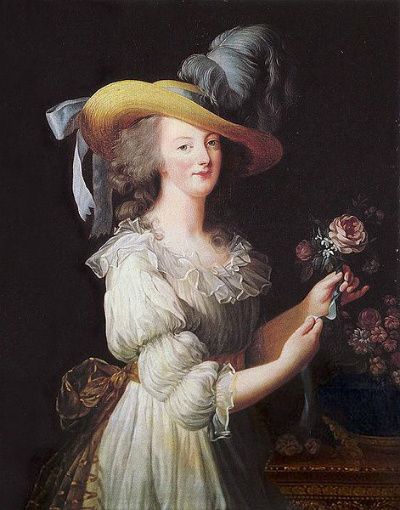
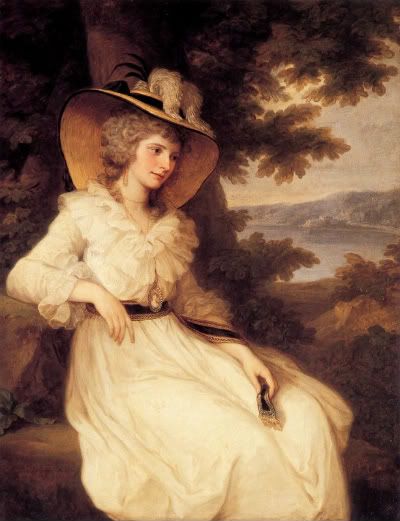
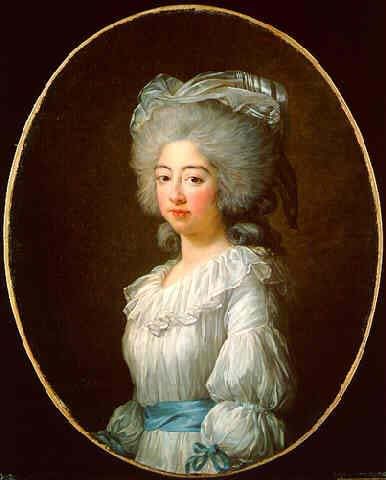
The gaulle, or chemise a la reine, was introduced by Marie Antoinette in the early 1780s. In contrast to the highly structured garments worn by the French court and society at large, the gaulle was incredibly light, flowing, and simple. It consists of layers of thin muslin, loosely draped around the body and belted around the waist with a sash. Fashionable ladies of France and England quickly took up the trend.

There was, of course, scandal. The name "Chemise a la Reine" is a reference to the similarity the garment bears to the chemise worn at the time as an undergarment by ladies, a mocking moniker that notes that the queen looked, to many in the public, as if she had been painted in her underwear.

Despite the scandal, though, women wore it. The Duchess of Devonshire, a famous fashionista by any account, reported that she got one from Marie Antoinette. The fashion spread through England and France, and why shouldn't it? Look at these dresses.


They're frothy, fairly comfortable concoctions of draping and ruffles that are perfect for spring and summer.

I really want one. Preferably one that's been shortened to be appropriate for modern wear, but a historically accurate gaulle would do. I don't mean a mini-gaulle, of course; that would be ridiculous. No, I want a gaulle that's knee-length and just as full. I  Doesn't that sound like the world's most comfortable summer dress?


This dress gives you an idea what I'm looking for. It's a Lolita line, but without ruffles and frills and heavy fabric that would make the dress unbearable in summer.

Historical dresses: they're not just for paintings anymore.

Thursday, November 1, 2012

Historical Longings: A Series for November

If you're like me, November is a time when the media bombards you with things you don't have and the message that you need to have them by going out shopping on Black Friday. As such, I am writing a series of posts that will comprise my incredibly consumerist wish list.

There is a catch, however.

If you've been paying attention, you'll have noticed my penchant for historical fashion. The media, of course, misunderstands what items, precisely, I am the target audience for and so I am going to write a wish list not for items that are on the market but items that would have to be made in order to find their way into my wardrobe. Because all of them will be historical clothing.

I hope you'll embark on this insane journey with me and make your own wish list.

Thursday, April 5, 2012

Inspiring Films: Stage Beauty

Stage Beauty.


While it was made in 2004, I discovered this movie in early 2006. It was, by some grace of God, on video on demand, and I am certain that I watched it at least ten times in the first week after I became aware of its existence. Some time later I was lucky enough to find it on DVD after a local video rental place closed down. Since then, I have watched the film innumerable times, purchased the script, and have made plans to go to a production early this summer. It's not a particularly common film, but it is absolutely worth tracking down for many reasons, not the least of which is that it is absolutely beautiful.

The movie is based on the play Compleat Female Stage Beauty by Jeffrey Hatcher, a period piece about Restoration England and the change from men playing women to women playing women on the English stage.


This is our male protagonist:


And so is this:


Billy Crudup plays Ned Kynaston, a real historical figure rendered here as a highly complicated man in terms of motivation, gender identity, and sexuality. His personal story as an actor attempting to adapt to the change in English theater is compelling, and he drives this film beautifully. Not only is Crudup handsome and empathetic in the role, but he gets to wear the most beautiful frocks and Restoration menswear. Seriously, look at that reddish-orange dress. Beautiful.

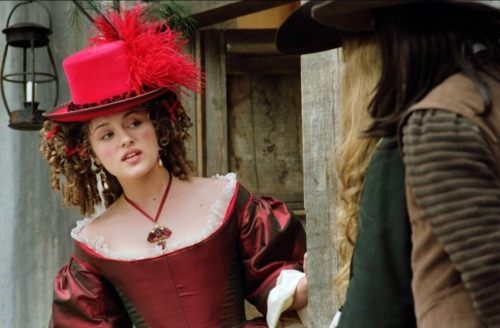
Crudup isn't the only one who gets to wear lovely frocks, however. No, our female protagonist (who, for those who explore both the film and the play, was once two characters) also gets some lovely gowns. Claire Danes plays Maria/Margaret Hughes (fictional and fictionalized historical figure respectively), and is absolutely gorgeous in the role. She, too, gets to wear the reddish-orange dress:


She also has some gorgeous frocks of her own, like the gown she wears in a portrait-painting scene that will make Restoration history geeks with an interest in art giggle with glee (hint: the portrait exists):


And, being common, she also gets some gorgeous peasant-y wear with lovely shifts and gowns that, while not nearly as flashy or sumptuous as those I've shown above, are still beautiful and well-tailored.


Every frame of the film is beautiful. Even the supporting characters are gorgeously dressed. Take one look at Zoe Tapper as Nell Gwynn:


Even if her first appearance is her wearing only a helmet and holding a naughty-bit-concealing shield, every costume she wears is fantastic. When watching this film, be ready to find that the king's mistress is not only one of the most prettily dressed people present, but also the person you are most likely to want to befriend. Tapper, alongside Rupert Everett as King Charles,  is delightful, and the court dress often goes from beautiful frocks for palace dinners:


To a variety of costume numbers like this fabulous matched set for a palace musicale.


Every minute of this movie is filled with pretty period clothing and, while not necessarily historically accurate, it's a delightful exploration a gorgeous and not often touched upon period of history. One day, I swear, I will make a Restoration-inspired dress, and it is all because of this beautiful film.

Good friends, go to it. It's a film worth seeing.